See your own water tested.In your kitchen. Free.
Your water passes the national guidelines. That's not the same as knowing what's in it. In 30 minutes a specialist shows you, at your own tap: chlorine turning pink, sediment on filter paper, your hardness and dissolved solids, each next to its guideline.
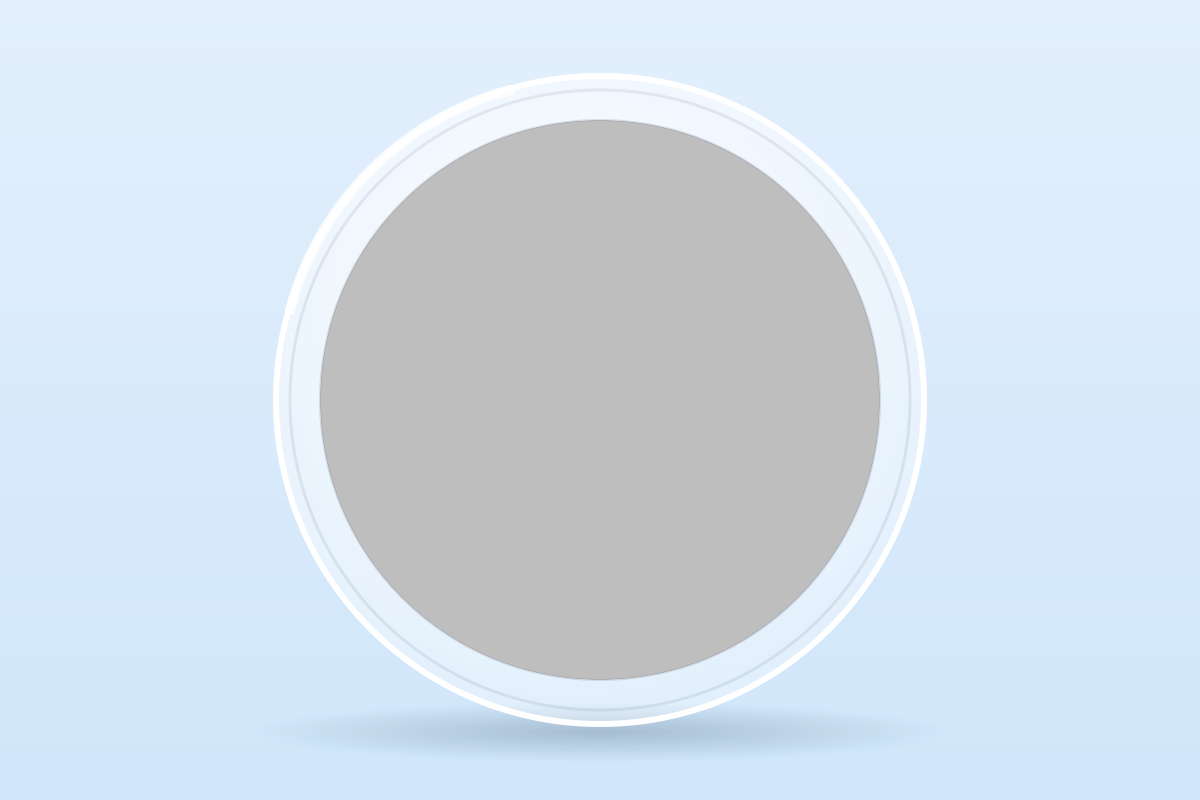
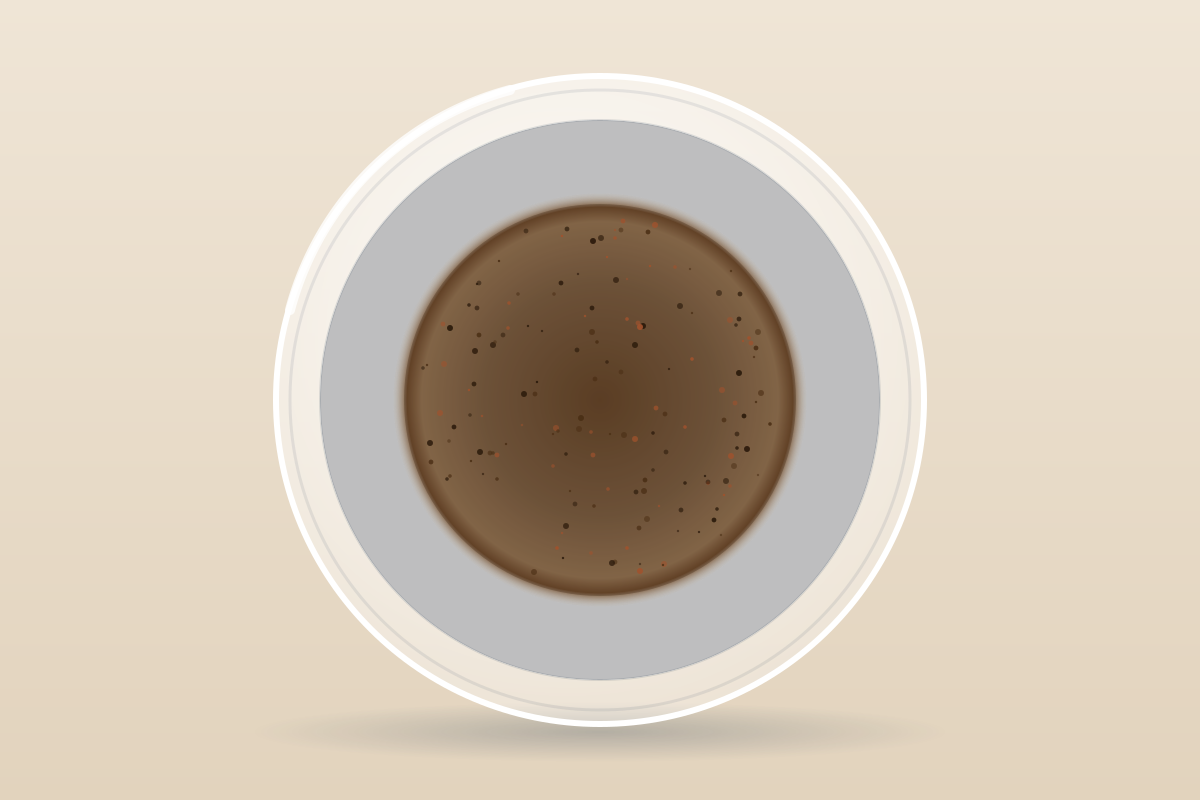 After the testFresh paper
Four things you'll watch happen at your tap.
No lab jargon, no waiting for an envelope. You see each result as it happens, and your Water Specialist explains it next to the Australian Drinking Water Guidelines.
Chlorine turns pink
A reagent drop in a vial of your tap water turns pink. The deeper the pink, the more chlorine. A second test picks up chloramine.
Sediment on filter paper
We draw your water through white filter paper. Whatever your pipes carry stays on it. You keep the paper.
Hardness strip
A strip changes colour against a chart: the minerals behind the scale on your kettle, screens and hot water system.
Dissolved solids (TDS)
A meter reads total dissolved solids in seconds, the overall mineral and salt load in your water.
Illustrations. Field screening, not a certified laboratory analysis; anything that needs confirming goes to a NATA-accredited lab.
Your family is the filter.
This is what a whole-home sediment cartridge looks like after a few months at the meter. Everything on it would otherwise have gone through your hot water system, your shower and your kettle.
What your filter catches →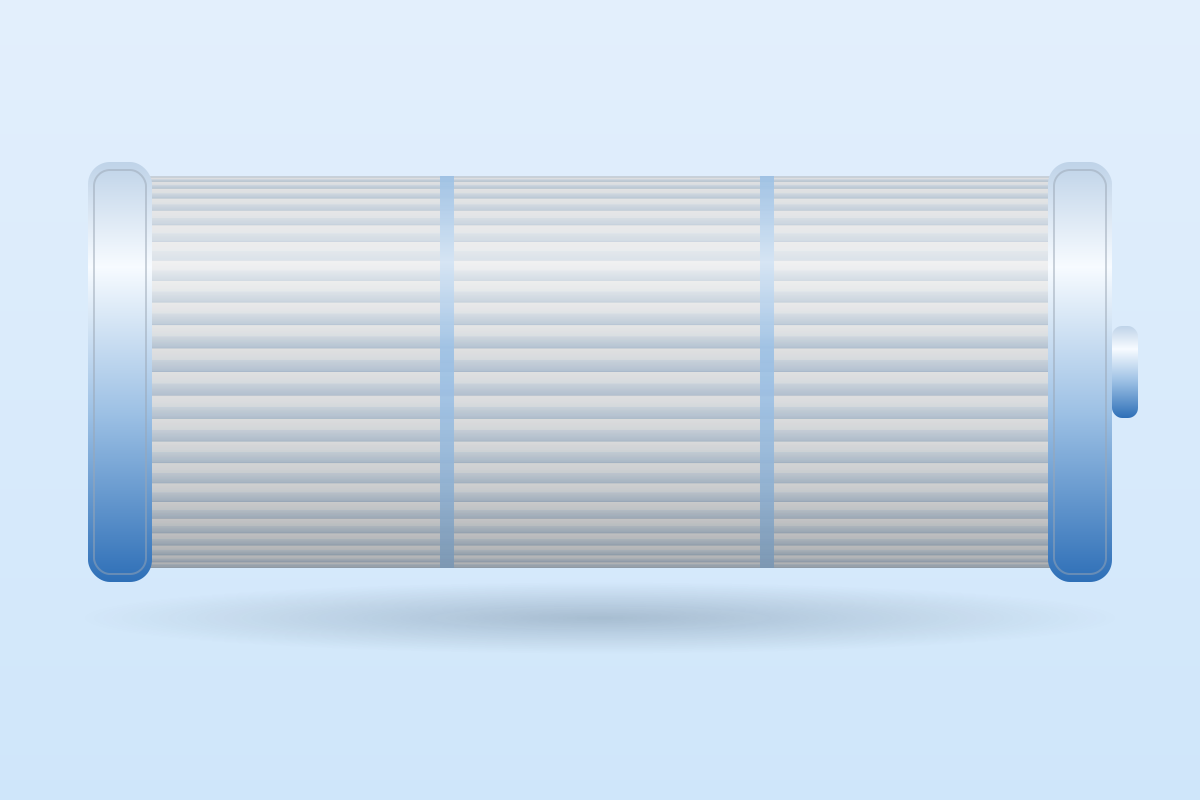
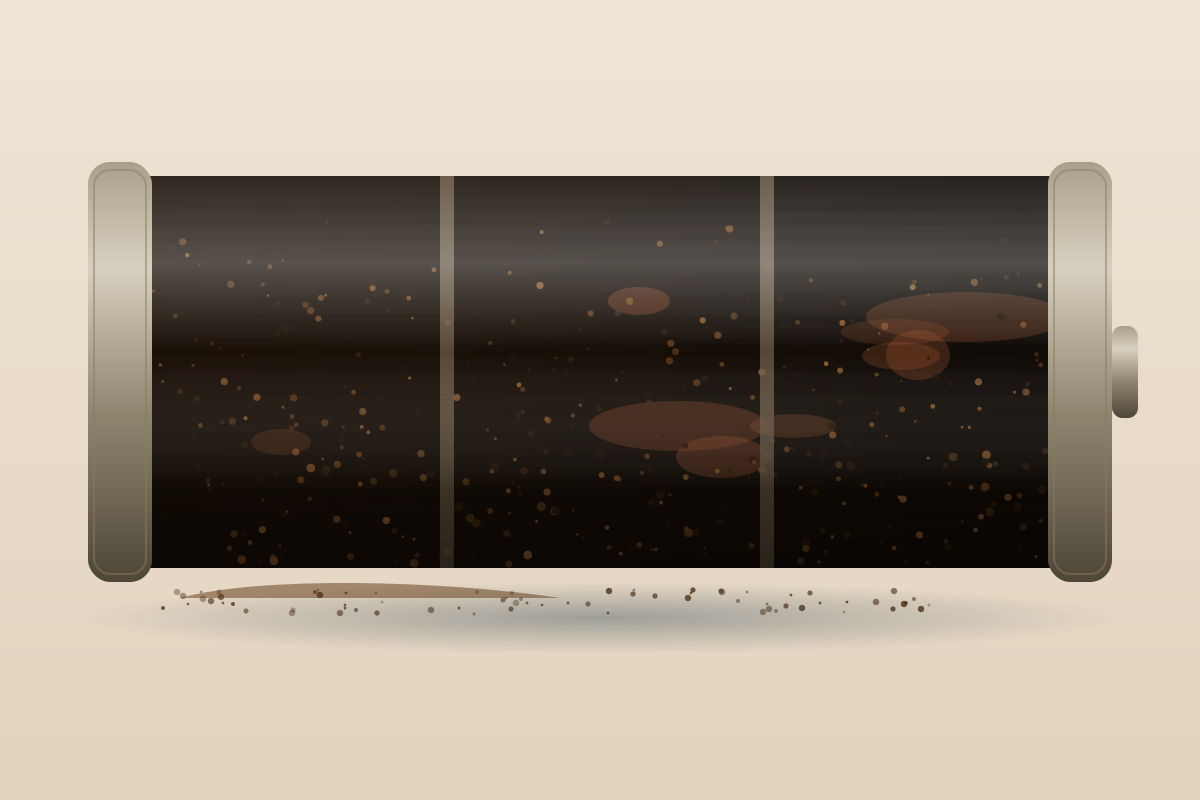 Used cartridge · 90 daysNew cartridge
Drinking is only part of it.
Under-sink filters protect one glass. Your family also breathes and bathes in your water every day.
One warm shower
Health Canada estimates a 10-minute warm shower in chlorinated water gives the same uptake of chloroform, a disinfection by-product, as drinking 2.7 litres of that water. You breathe it in the steam and absorb some through skin.
Health Canada, section 5.6 →Bath time counts too
In the same review, an adult's 30-minute bath added about 2.6 litre-equivalents of chloroform through breathing and skin, on top of what they drank. An under-sink filter does nothing about it.
Health Canada, section 5.2 →Lead in the fittings
Only lead-free plumbing products (no more than 0.25% lead) can be installed on drinking water pipes from 1 May 2026. Homes plumbed before then can still have older brass fittings. We screen for lead at your tap.
ABCB WaterMark →Australian tap water meets national health guidelines. Shower and bath figures are Health Canada's modelled annual averages for chlorinated supplies; levels in your supply differ. They describe everyday exposure, not a health risk, so you can decide how much you want to reduce it.
Book my free water testNine tests, each next to its guideline.
Guidelines from the Australian Drinking Water Guidelines (NHMRC). Field screening, with lab testing when something needs confirming.
| Test | Why it matters | Guideline |
|---|---|---|
| Free chlorine | Taste and smell; what you breathe in shower steam | Health 5 mg/L · taste ~0.6 |
| Total chlorine | Shows chloramine, used in parts of several networks | Monochloramine health 3 mg/L |
| Hardness | Scale on kettles, screens and hot water systems | Taste 200 mg/L |
| Dissolved solids | Overall mineral content and taste | Taste 600 mg/L |
| pH | Corrosion and taste | 6.5–8.5 |
| Iron | Rust, staining, metallic taste | Taste 0.3 mg/L |
| Copper | Comes from household pipes | Health 2 mg/L |
| Nitrate | Mainly relevant to tank and bore water | Health 50 mg/L |
| Lead (screen) | From old fittings; positives go to a NATA lab | Health 0.01 mg/L |
Before you book
Is it really free?
Yes. No charge, no obligation. It includes a written recommendation and a fixed-price quote from your Water Specialist, in person or by email.
Will someone try to sell me something at my house?
No. Our Water Specialists explain your results and answer questions. Nothing is signed or paid in your home. Your Water Specialist gives you a written quote, in person or by email, and you decide in your own time.
How long does it take?
About 30 minutes. We test at the kitchen tap and where the water enters your home, and photograph the meter area so the plumber can plan the install.
What if my water is fine?
Then your report will say so. Plenty of homes don't need a whole-home system, and we'd rather tell you that than sell you one.
Is my tap water unsafe?
No. City water in Australia is treated to meet the Australian Drinking Water Guidelines. The test shows what is still in it, like chlorine, sediment and hardness, so you can decide whether you want to filter it.
See it for yourself.
Start with your postcode. Takes about 2 minutes.